Ceramic Material Properties

What Is Alumina Used For? Applications Mapped to the Property Behind Them

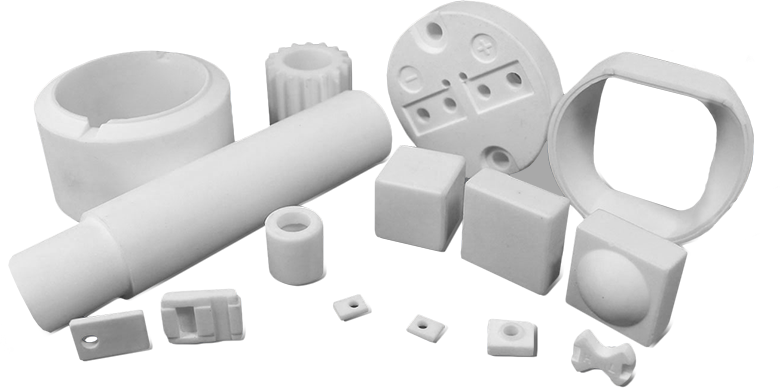
What Is Alumina Used For? Industrial Ceramic Parts Most alumina is used to produce primary aluminum. Common alumina uses in industrial ceramics include insulating circuits, protecting surfaces from sliding wear, shielding sensors in furnaces, and providing hard sealing surfaces in pumps. Industrial Alumina Applications at a Glance Application Typical parts What alumina does there Electrical

What Is Alumina Used For? Applications Mapped to the Property Behind Them Read More »
Zirconia vs Alumina: Strength, Wear, Cost and How Engineers Choose

Zirconia vs Alumina: Strength, Wear, Cost & Selection For a ceramic bushing, seal ring, or valve component, start with alumina when electrical insulation, heat transfer, or purchase cost drives the choice. Consider zirconia when repeated chipping or cracking limits service life. If alumina meets most requirements but its edges keep chipping, zirconia-toughened alumina (ZTA) is

Zirconia vs Alumina: Strength, Wear, Cost and How Engineers Choose Read More »

Alumina CTE: Thermal Expansion by Grade, and Why It Matters at Metal Joints

Alumina CTE (coefficient of thermal expansion) for our six standard grades is 7.7 to 8.4 × 10⁻⁶/°C, measured as a mean value from 25 to 800 °C. In everyday terms, a 100 mm alumina part grows about 0.6 mm between room temperature and 800 °C. Before you compare that with another datasheet, check the temperature

Alumina CTE: Thermal Expansion by Grade, and Why It Matters at Metal Joints Read More »

Zirconia Hardness: Vickers Values for Y-TZP (and Why It’s Not Cubic Zirconia)

How hard is zirconia? Zirconia hardness sits below that of alumina, but zirconia is about twice as tough: on our data sheet, zirconia (zirconium oxide, ZrO₂) is specified at HV0.5 ≥ 1,200, below every alumina grade, while its fracture toughness is 9.18 MPa·m¹/², against 4.3 MPa·m¹/² for 99.7% alumina. Here zirconia means engineering zirconia such

Zirconia Hardness: Vickers Values for Y-TZP (and Why It’s Not Cubic Zirconia) Read More »

Alumina 99.5% vs 97%: Properties, and When the Upgrade Is Worth It

Compared with our 97%, alumina 99.5 buys four things: better electrical insulation, half the dielectric loss, better heat conduction, and the highest fracture toughness of any alumina grade we make. It does not buy better acid resistance, much more temperature headroom, or a large jump in strength. And for most electrical and thermal needs, 99%

Alumina 99.5% vs 97%: Properties, and When the Upgrade Is Worth It Read More »

Stabilized Zirconia: Grades, Properties & Selection Guide

Stabilized zirconia is a structural ceramic formed by doping pure zirconia (ZrO₂) with oxides such as Y₂O₃, MgO, CaO, or CeO₂. Stabilizers allow crystal phases that are otherwise stable only at high temperatures to be retained at room temperature. When zirconia plungers or seal rings experience micro-cracking or strength degradation under humid, high-temperature operating conditions,

Stabilized Zirconia: Grades, Properties & Selection Guide Read More »

Alumina Grades Explained: 95% to 99.99% Purity and What Each Grade Buys

Alumina grades are named by their Al2O3 content by weight, and the six standard grades of alumina we produce run from 95% to 99.99%. Most designs only need to choose between a few of them, because a handful of steps in that range change what the part can do: 99% for high-voltage insulation and 1,500

Alumina Grades Explained: 95% to 99.99% Purity and What Each Grade Buys Read More »

Tensile Strength of Alumina and Why It Has No Yield Strength

Alumina (aluminum oxide) does have a tensile strength, but it is rarely measured, so most datasheets leave it out. In one supplier’s published data, the tensile strength of alumina comes out at about 52 to 71 percent of the same material’s flexural strength. Alumina has no yield strength at all. At room temperature it never

Tensile Strength of Alumina and Why It Has No Yield Strength Read More »