November 2026

What Is Alumina Used For? Applications Mapped to the Property Behind Them

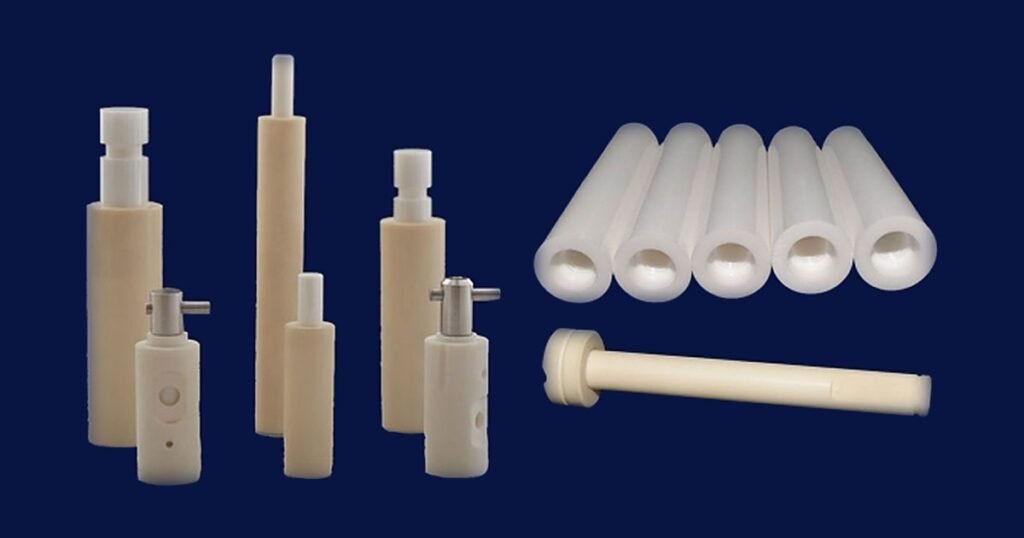
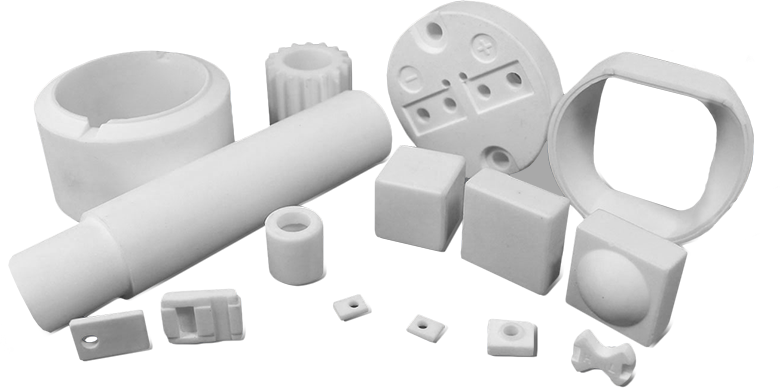
What Is Alumina Used For? Industrial Ceramic Parts Most alumina is used to produce primary aluminum. Common alumina uses in industrial ceramics include insulating circuits, protecting surfaces from sliding wear, shielding sensors in furnaces, and providing hard sealing surfaces in pumps. Industrial Alumina Applications at a Glance Application Typical parts What alumina does there Electrical

What Is Alumina Used For? Applications Mapped to the Property Behind Them Read More »
Zirconia vs Alumina: Strength, Wear, Cost and How Engineers Choose

Zirconia vs Alumina: Strength, Wear, Cost & Selection For a ceramic bushing, seal ring, or valve component, start with alumina when electrical insulation, heat transfer, or purchase cost drives the choice. Consider zirconia when repeated chipping or cracking limits service life. If alumina meets most requirements but its edges keep chipping, zirconia-toughened alumina (ZTA) is

Zirconia vs Alumina: Strength, Wear, Cost and How Engineers Choose Read More »

Specific Heat Capacity of Alumina by Temperature

Specific Heat Capacity of Alumina by Temperature | FineCer The specific heat capacity of alumina increases as its temperature rises. For alpha-alumina (α-Al₂O₃), NIST thermochemical data gives a value of approximately 773 J/kg·K at 25 °C, increasing to about 1,295 J/kg·K at 1,200 °C. This property helps determine how much energy an alumina component needs

Specific Heat Capacity of Alumina by Temperature Read More »

Thermal Shock Resistance: Alumina vs Zirconia vs ZTA

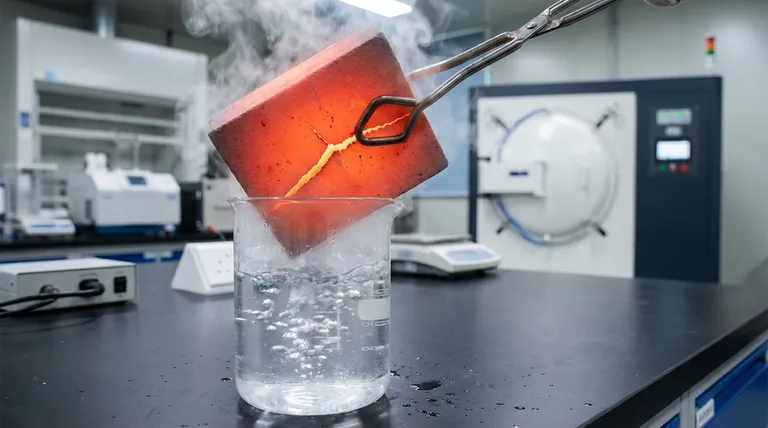
Thermal shock resistance is the largest sudden temperature change a ceramic can take without cracking. In published supplier datasheets, 99% to 99.5% alumina survives a drop of about 150 to 200 °C. Zirconia toughened alumina (ZTA) has reported thermal-shock values of 300 °C in CoorsTek’s data and 325 °C for Ideal-tek’s MZ grade. Zirconia is

Thermal Shock Resistance: Alumina vs Zirconia vs ZTA Read More »

Aluminum Nitride Thermal Conductivity vs Alumina: When AlN Is Worth It

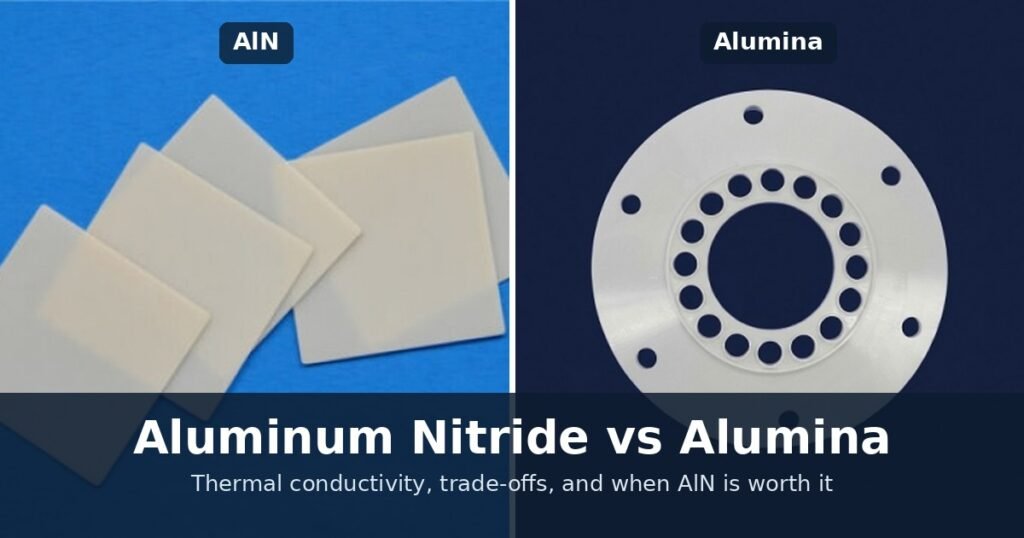
Aluminum nitride thermal conductivity is about 7 to 16 times higher than that of 99% alumina. Supplier datasheets list most aluminum nitride (AlN) grades at 150 to 230 W/m·K, while 99% alumina on our datasheet sits at 14 to 21 W/m·K. Both ceramics also block electricity. That is why engineers weigh alumina vs aluminum nitride

Aluminum Nitride Thermal Conductivity vs Alumina: When AlN Is Worth It Read More »

Alumina CTE: Thermal Expansion by Grade, and Why It Matters at Metal Joints

Alumina CTE (coefficient of thermal expansion) for our six standard grades is 7.7 to 8.4 × 10⁻⁶/°C, measured as a mean value from 25 to 800 °C. In everyday terms, a 100 mm alumina part grows about 0.6 mm between room temperature and 800 °C. Before you compare that with another datasheet, check the temperature

Alumina CTE: Thermal Expansion by Grade, and Why It Matters at Metal Joints Read More »

Zirconium Oxide Thermal Conductivity: Why Zirconia Insulates Heat

Zirconium oxide thermal conductivity is low: on our data sheet, zirconia (ZrO₂) conducts only 1.2–3.0 W/(m·K) at 25°C, roughly 3 to 18 times less than alumina depending on the grade. That is why zirconia is chosen where heat should stay put, from insulating custom ceramic parts to thermal barrier coatings. The low value comes from

Zirconium Oxide Thermal Conductivity: Why Zirconia Insulates Heat Read More »

Zirconia Hardness: Vickers Values for Y-TZP (and Why It’s Not Cubic Zirconia)

How hard is zirconia? Zirconia hardness sits below that of alumina, but zirconia is about twice as tough: on our data sheet, zirconia (zirconium oxide, ZrO₂) is specified at HV0.5 ≥ 1,200, below every alumina grade, while its fracture toughness is 9.18 MPa·m¹/², against 4.3 MPa·m¹/² for 99.7% alumina. Here zirconia means engineering zirconia such

Zirconia Hardness: Vickers Values for Y-TZP (and Why It’s Not Cubic Zirconia) Read More »