
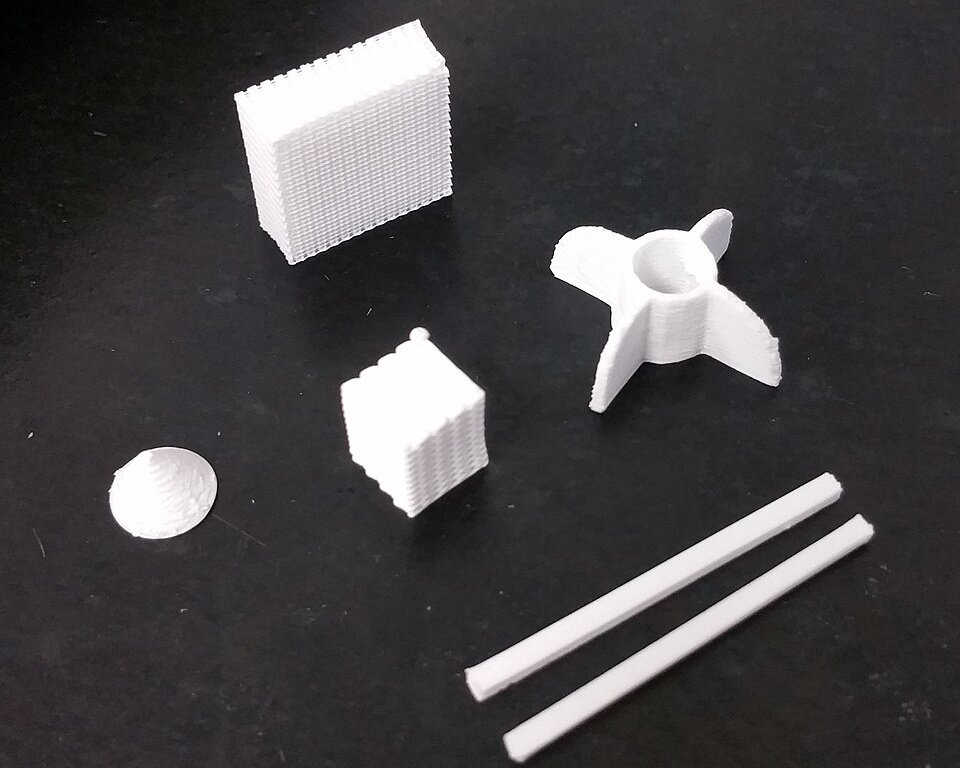
Most alumina is used to produce primary aluminum. Common alumina uses in industrial ceramics include insulating circuits, protecting surfaces from sliding wear, shielding sensors in furnaces, and providing hard sealing surfaces in pumps.
Industrial Alumina Applications at a Glance
| Application | Typical parts | What alumina does there |
|---|---|---|
| Electrical and electronics | Substrates, insulating plates, and spacers | Electrically separates conductive parts |
| Industrial wear | Chute liners and guide plates | Resists abrasion at the contact surface |
| High-temperature equipment | Furnace tubes, thermocouple protection tubes, and kiln setters | Protects sensors or supports parts in the hot zone |
| Chemical processing | Pump seal rings and other wetted parts | Provides a hard working surface in compatible fluids |
Electrical Parts: Check Which Layer Holds Back Heat
An alumina substrate is worth considering when a circuit needs an electrically insulating base and the assembly can still move enough heat to the heat sink. Metal traces carry the current across the surface, while heat from the components travels through the ceramic.
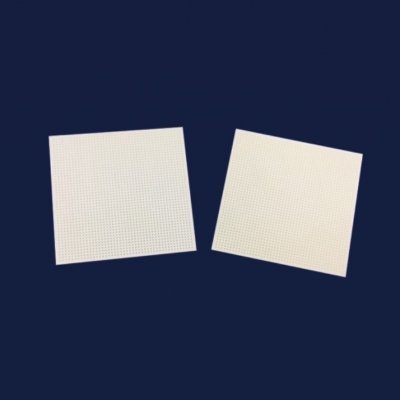
FineCer’s 95% alumina has a thermal conductivity of 10–16 W/(m·K), and 99.5% alumina has a range of 14–21 W/(m·K). The ranges overlap, so compare each candidate grade at the board thickness you need for insulation. If the component runs hot while the heat sink stays relatively cool, check how well the board contacts the sink. Consider a higher-conductivity ceramic such as aluminum nitride if heat transfer through the board itself is the main bottleneck.
Another use of alumina is as a rigid insulating spacer that keeps conductive parts apart. In semiconductor equipment, specify the spacer’s installed thickness and how it will be clamped. Uneven clamping can crack the ceramic, even when the spacer provides the required insulation.
Wear Liners: Read the Damage Before Replacing the Part
Consider an alumina liner when material sliding along a chute is gradually wearing away its surface. A long groove that follows the direction of flow gives you a place to look for repeated abrasion. Mark that zone on the drawing so the replacement protects the area that actually wears.
Use hardness as a first screening check for liners exposed mainly to sliding wear. FineCer’s 95% alumina has a Vickers hardness of at least 1,410 HV 0.5, compared with at least 1,500 HV 0.5 for 99.5% alumina.
If the liner repeatedly chips at the inlet, first check where the material lands, whether it strikes a ceramic edge, and how the liner is supported there. If the chips line up with the impact point, review the inlet geometry and support before ordering the same liner in a harder grade. A chute can have both problems: abrasion farther down and impact damage where material enters.
Furnace Parts: Apply Both Temperature and Cycle Checks
Use the grade’s maximum use temperature to screen thermocouple protection tubes, then check whether the tube can handle its heating and cooling cycle. FineCer lists maximum use temperatures of 1,350 °C for 95% alumina and 1,500 °C for 99.5% alumina. A peak of 1,400 °C exceeds the listed limit for 95% alumina. The 99.5% grade passes that initial temperature check, and its suitability still depends on the heating and cooling cycle.
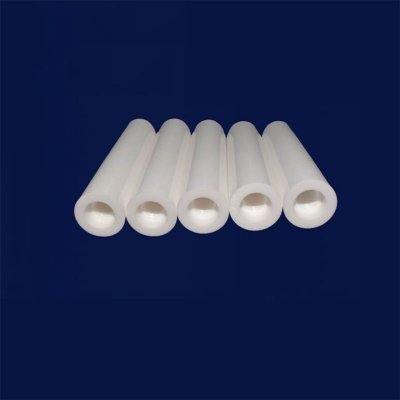
A tube left in the hot zone and one pulled out between batches can reach the same peak temperature. The second case can introduce a sharper temperature change. When one part of the tube cools much faster than another, the resulting stress can crack it. This is thermal shock. Give the supplier the peak temperature, furnace atmosphere, and when the part is inserted and removed so the grade and tube design can be reviewed together.
Pump Seals: Check the Fluid and the Solids Separately
An alumina seal ring can provide a hard sliding face when it is compatible with the fluid it touches. For chemical processing equipment, check the composition, concentration, and temperature of both the process fluid and any cleaning solution that reaches the seal.
Then check whether the fluid carries solids. A clear liquid and a slurry can have the same chemistry, but the particles in the slurry can wear the seal faces. If a removed ring has visible scoring, report the solids and share a photo of the face. That gives the seal supplier a specific reason to review the face materials and the seal arrangement before specifying a replacement.
What to Include When Specifying an Alumina Part
Put the part’s main job and operating conditions next to the drawing. For a substrate, state the insulation and cooling requirements. For a liner, show where the material first hits and where it slides. For a furnace tube, describe the cycle. For a seal ring, identify the fluids and any solids. These details narrow the choice of grade and show which features of the part need a closer review.
Use the alumina grade and property comparisons to check the material data. If a part has already failed in service, send FineCer the drawing and operating conditions with a photo of the damage.
Frequently Asked Questions
Can a hole be added to an alumina part after firing?
Some fired parts can be machined with diamond tooling. Whether a new hole is practical depends on its diameter, its distance from the edge, and the thickness of the part. For a new design, specify the hole location and tolerance before production so the manufacturer can plan how to form and finish it.
Do all semiconductor alumina parts need the same purity?
Purity depends on where the part sits and what it touches. An insulator outside the process area may have different cleanliness requirements from a plate or ring exposed inside the chamber. Use the equipment’s material specification for each part.
Can an alumina crucible react with the material inside it?
Some samples or additives can react with alumina at high temperatures. Check the intended sample, any flux, and the test temperature. Compatibility matters especially when contamination or a change in the sample could affect the result.
What should a drawing show for a ceramic plate that has to sit flat?
Mark which face needs to be flat and specify its flatness tolerance. Thickness controls the distance between the two faces. If the faces also need to stay parallel, specify parallelism separately so the right surfaces are checked during inspection.
External References
- U.S. Geological Survey on alumina and primary aluminum production
- Microchip on thermal performance in ceramic substrates
- RSC Group on alumina wear liners in material handling
- Morgan Technical Ceramics on service temperature and CoorsTek on alumina grades and corrosion resistance
- Precision Ceramics on machining fired alumina and the machining discussion that prompted the drilling question
- Alfa Laval pump handbook on mechanical seal selection and Morgan Technical Ceramics on thermal shock
- NETZSCH guidance on alumina crucibles