ella

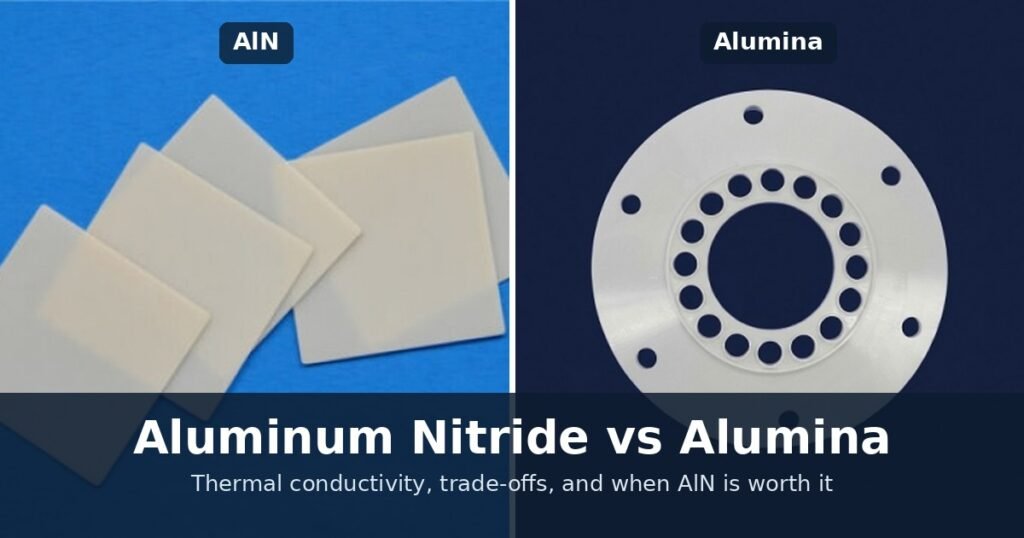
Aluminum Nitride Thermal Conductivity vs Alumina: When AlN Is Worth It

Aluminum nitride thermal conductivity is about 7 to 16 times higher than that of 99% alumina. Supplier datasheets list most aluminum nitride (AlN) grades at 150 to 230 W/m·K, while 99% alumina on our datasheet sits at 14 to 21 W/m·K. Both ceramics also block electricity. That is why engineers weigh alumina vs aluminum nitride

Aluminum Nitride Thermal Conductivity vs Alumina: When AlN Is Worth It Read More »
Alumina CTE: Thermal Expansion by Grade, and Why It Matters at Metal Joints

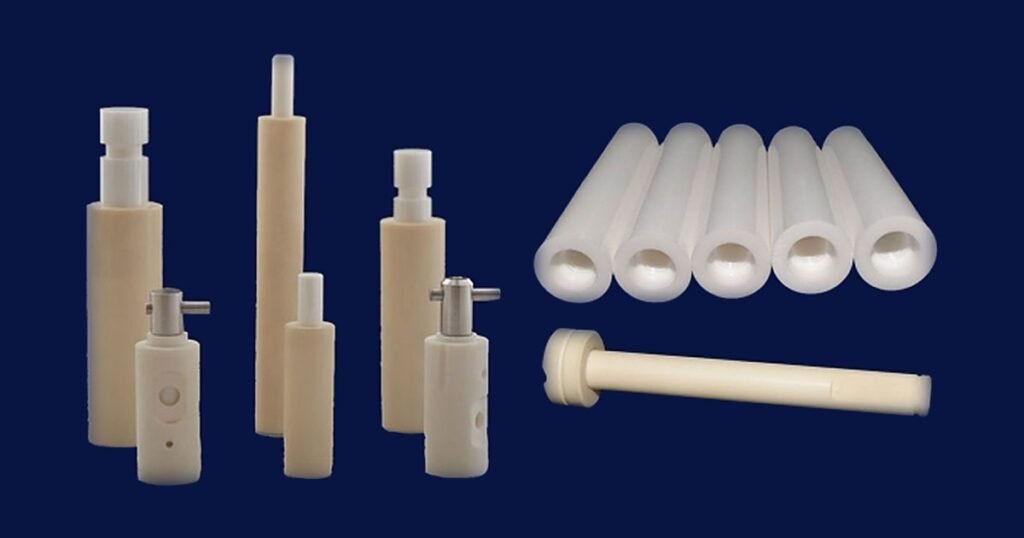
Alumina CTE (coefficient of thermal expansion) for our six standard grades is 7.7 to 8.4 × 10⁻⁶/°C, measured as a mean value from 25 to 800 °C. In everyday terms, a 100 mm alumina part grows about 0.6 mm between room temperature and 800 °C. Before you compare that with another datasheet, check the temperature

Alumina CTE: Thermal Expansion by Grade, and Why It Matters at Metal Joints Read More »

Alumina 99.5% vs 97%: Properties, and When the Upgrade Is Worth It

Compared with our 97%, alumina 99.5 buys four things: better electrical insulation, half the dielectric loss, better heat conduction, and the highest fracture toughness of any alumina grade we make. It does not buy better acid resistance, much more temperature headroom, or a large jump in strength. And for most electrical and thermal needs, 99%

Alumina 99.5% vs 97%: Properties, and When the Upgrade Is Worth It Read More »

Alumina Grades Explained: 95% to 99.99% Purity and What Each Grade Buys

Alumina grades are named by their Al2O3 content by weight, and the six standard grades of alumina we produce run from 95% to 99.99%. Most designs only need to choose between a few of them, because a handful of steps in that range change what the part can do: 99% for high-voltage insulation and 1,500

Alumina Grades Explained: 95% to 99.99% Purity and What Each Grade Buys Read More »

Cutting Alumina: Laser, Diamond Saw, and Waterjet Compared

Cutting Alumina: Laser, Diamond Saw, and Waterjet Compared Cutting alumina after it has been fired means separating a material that breaks before it bends. Diamond grinds a path through it, a laser melts and vaporizes one, or an abrasive waterjet erodes one. The choice depends on the part’s thickness, whether the cut is straight or

Cutting Alumina: Laser, Diamond Saw, and Waterjet Compared Read More »

Green Machining of Ceramics: Shrinkage, Tolerances, and Cost

Green Machining of Ceramics: Shrinkage, Tolerances, and Cost Green machining is cutting a ceramic part while it is still a pressed powder blank, before the furnace makes it hard. “Green” means unfired: a little organic binder holds the powder together. It lowers cost when a part has holes, slots, and steps that would each need

Green Machining of Ceramics: Shrinkage, Tolerances, and Cost Read More »

Machining Alumina: Grades, Grinding Parameters, and Costs

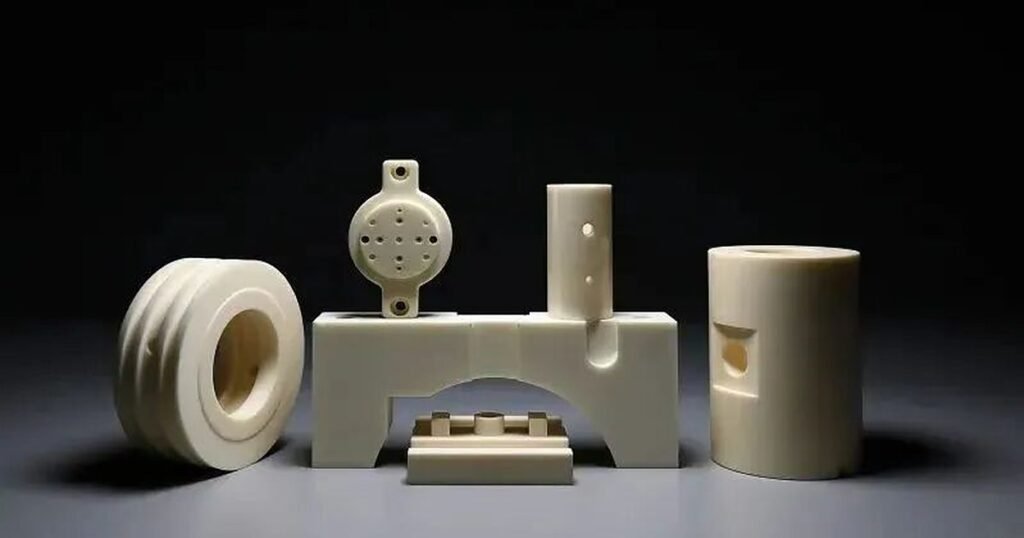
Machining Alumina: Grades, Parameters, and Costs Machining alumina ceramic reliably comes down to two decisions most buyers don’t realize they’re making: which grade to specify (95%, 99%, or a higher purity), and how many surfaces truly need precision finishing after firing. Alumina is as hard as most metal-cutting tools and much harder than steel, so

Machining Alumina: Grades, Grinding Parameters, and Costs Read More »

Ceramic Machining Tolerances and Cost: How to Design and Quote Ceramic Parts

Ceramic Machining Tolerances and Cost: A Design Guide Ceramic machining of sintered technical ceramics relies almost exclusively on diamond abrasives, and the quote for a ceramic part is set by two things: how many faces need diamond time, and how tight each of those faces has to be. Most of a ceramic part is shaped

Ceramic Machining Tolerances and Cost: How to Design and Quote Ceramic Parts Read More »